

Index
- Why dye cotton: from sustainability to change
- Types of fabric dyes: which one to choose for cotton
- Fabric Preparation: The Essential First Step
- How to dye cotton in the washing machine: the simplest method
- Hand dyeing: total control and personalized results
- Fabric dye fixative: protect color over time
- Refreshing faded clothes: from gray to bright
- Common mistakes and how to avoid them
Last updated: August 23, 2026
Why dye cotton: from sustainability to change
Dyeing cotton is no longer an activity relegated to artisanal workshops. The global textile dye market was valued at $9.30 billion in 2025, with growth expected to reach $15.62 billion by 2033.globalmarketinsights.com). This boom reflects a profound cultural shift: more and more people are choosing to renew their clothes instead of buying new ones.
At Aybel, we understand this trend well. Our customers are looking for a way to transform a faded garment into something new, to express their creativity, or to reduce the environmental impact of fast fashion. Home dyeing represents a concrete alternative to consumerism: an hour's work can give a second life to a favorite T-shirt or faded curtains.
L global textile industry uses about a quarter of the world's chemicals by volume (Colorifix Project, funded by the EU, 2022). The dyeing process consumes approximately 5,000 billion liters of water every year ( unep.org ). When you dye an existing garment, you avoid producing a new one. It's not a perfect solution, but it's a concrete step towards a more conscious relationship with your clothes.
In this guide, you'll discover how to dye cotton effectively, both in the washing machine and by hand. We'll address common mistakes, show you how to choose the right type of dye, and explain why fixing agents are essential for long-lasting results.
Types of fabric dyes: which one to choose for cotton
Choosing the right dye is the foundation of any successful project.
Reactive dyes vs. universal dyes
Reactive dyes are the preferred choice for cotton. This type of dye creates a direct chemical bond with the cellulose fibers, resulting in superior colorfastness.
Universal dyes are formulated to work on a wider range of fibers. They offer convenience, but often sacrifice color vibrancy and durability. If your cotton is pure, a reactive dye will give you visibly better results: colors remain brighter after numerous washes and the risk of fading is significantly reduced.
Natural and bio-based dyes
An interesting trend is emerging: the use of natural and bio-based dyes, obtained from plant sources, agricultural byproducts, or microorganisms. Research and biotechnology are revolutionizing this field, allowing for intense and surprisingly long-lasting shades.
Plant fibers like cotton have lighter, less vibrant hues than animal fibers. Natural colors, formed by the combination of several different dye molecules, produce a very vibrant color.
However, natural dyes aren't always the best solution in terms of environmental impact. They're very delicate and risk fading more quickly with frequent washing and exposure to the sun. Furthermore, industrial-scale production requires finances, space, and manpower to grow a sufficient quantity of dye plants. L also requires significant water resources.
If you choose natural dyes, you're choosing beauty and conscious sustainability, not absolute durability. It's a conscious compromise.
Type of dye |
Color fastness |
Ease of use |
Environmental impact |
Cost |
|---|---|---|---|---|
Reactive |
Excellent |
Average |
Moderate |
€5-8 per item |
Universal |
Good |
High |
Moderate |
€4-6 per item |
Naturals |
Average-Good |
Average |
Bass |
€6-12 per item |
Fabric Preparation: The Essential First Step
Many beginners skip this step and are then surprised by the inconsistent results, but initial preparation is essential.
The fabric must be cleaned before any dyeing. Dirt, sweat, residual oils, and industrial finishing agents create a barrier that prevents the dye from penetrating evenly. Wash the garment in warm water with a neutral detergent, without fabric softener. L softener creates a protective film that the dye cannot penetrate.
After washing, the fabric should be damp when it enters the dye bath. A completely dry fabric tends to absorb the dye unevenly, creating darker and lighter areas. Wring out the garment gently and leave it damp.
How to dye cotton in the washing machine: the simplest method
Machine dyeing is the preferred method for those seeking simplicity and reliable results. It doesn't require constant supervision, and the machine's controlled heat ensures even dye distribution.

Dosage and concentration of the dye
A 10-gram sachet of dye optimally dyes 250 grams of dry fabric. If you use a smaller amount, the color will be more subtle. If you use more dye, the color will be more saturated, but the risk of unevenness increases.
Calculate the weight of your dry garment. A cotton T-shirt typically weighs between 150 and 250 grams, a pair of jeans between 400 and 600 grams. For larger items, you can use multiple sachets or opt for the 225 ml liquid bottle , which dyes 1 kg of dry fabric.
Follow the instructions on the package: too low a concentration produces a pale color, while too high a concentration creates areas of intense color and other lighter ones.
Dyeing cycle and water temperature
Use a delicate or cotton wash cycle with hot water between 40 and 60 degrees Celsius. Excessively hot L can damage the fabric and cause shrinkage, while cold water doesn't activate the dye sufficiently.
The cycle should last at least 45 minutes. During this time, the dye penetrates the fibers and the fixative begins to chemically bind to the cotton. Don't interrupt the cycle halfway.
After the dyeing cycle, rinse with cold water. This removes any excess, unfixed dye. If the rinse water is still very colored, repeat the rinse until it runs clear.
Hand dyeing: total control and personalized results
Hand dyeing offers control that a washing machine can't. It's the method of choice for those seeking customized results or different effects.
Total immersion vs. tie-dye and creative techniques
Total L is the simplest method: fill a large pot with hot water, add the dye, and immerse the damp fabric. Keep the fabric in constant motion for the first 20-30 minutes, then let it sit for another 15-20 minutes. The total time is usually 45-60 minutes.
Tie-dyeing requires advance planning. Fold, roll, or tie the fabric before dipping it, so that certain areas remain protected from the dye and create patterns. Rubber bands can create concentric circles, while pleats create stripes or geometric designs. Aybel's Tie Dye Set 1 includes rubber bands and specific instructions for these effects.
Keep the water between 40 and 60 degrees Celsius. If it drops below 40 degrees, the dye won't penetrate effectively. If it goes above 60 degrees, you risk damaging the fabric.
Fabric dye fixative: protect color over time
The fixative isn't optional: it's a biological necessity of textile chemistry. It activates the chemical bond between the dye and the cotton fibers. Without it, the dye remains partially loose on the surface and comes off after the first few washes.
How to apply the fixative and why it is crucial
If you're dyeing in the washing machine, add the fixative to the fabric softener compartment. If you're dyeing by hand, add the fixative to the final rinse water, immerse the dyed fabric, and keep it moving for about 15-20 minutes. Then, rinse thoroughly with cold water.
Aybel's Fiske Fixing L is specially formulated for this purpose and can be used in the washing machine or by hand. Add 100 ml of fixing agent per 1–1.5 kilograms of dry fabric. If using a washing machine, pour it into the fabric softener compartment during the final rinse.
The difference between a properly fixed garment and one without fixative is evident after the first few washes. The fixed garment retains its original color, while the one without fixative begins to visibly fade.
Refreshing faded clothes: from gray to bright
This is when dye shows its true value. A garment that seemed destined for the trash finds new life and color.
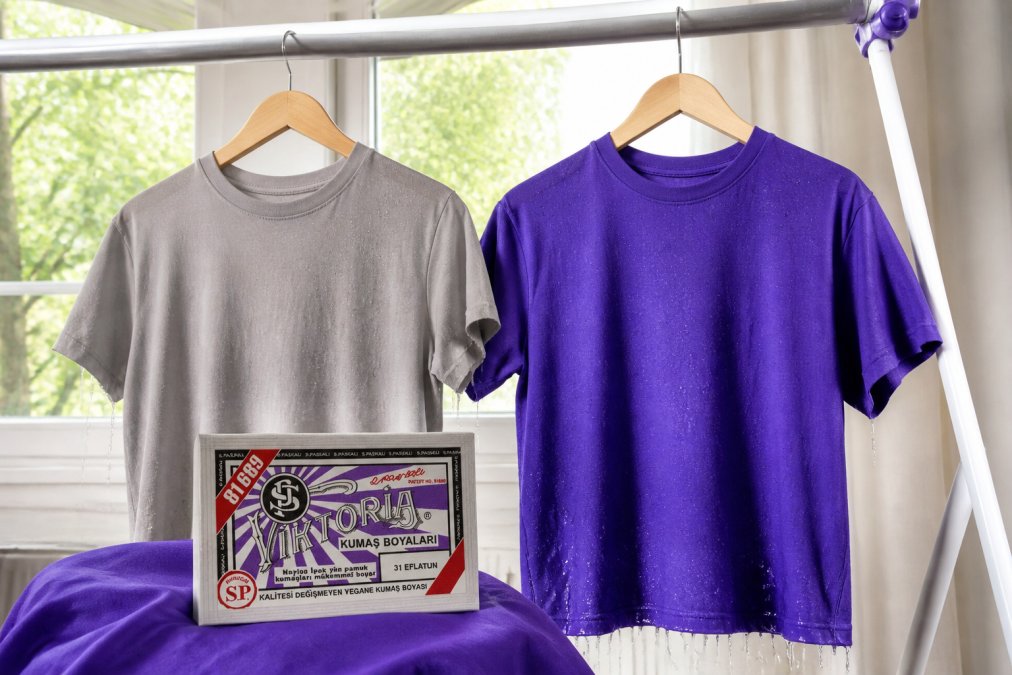
Choosing the right color for your faded garment
A faded garment isn't a blank canvas. Its residual color affects the final result. A shirt that was originally blue and is now gray will never turn completely red if you dye it red: the residual gray mixes with the red, creating a darker tone.
Understand the starting color. If the garment is light gray, you can dye it almost any color. If it's dark gray or still has traces of the original color, choose shades that blend with it. A dark color dyes a faded garment better than a light one.
Always test on a small, hidden area before dyeing the entire garment. Cut a small rectangle of fabric from the inside seam, dye only that area, and evaluate the result. This takes an extra 30 minutes, but it protects you from unpleasant surprises.
Dyeing techniques to maximize uniformity
L is the main challenge when dyeing a previously worn garment. The fibers have absorbed sweat, oils, and dirt unevenly.
A specific pretreatment helps. Wash the garment in very hot water with a degreasing detergent, then immerse it in the still-damp dye bath. While dyeing, keep the fabric in constant motion. Every 10 minutes, remove the garment from the water, wring it out lightly, and re-immerse it. This movement ensures that every fiber is evenly exposed to the dye.
If you notice darker areas during the process, don't intervene immediately. Uniformity often improves in the last 15-20 minutes of dyeing.
Common mistakes and how to avoid them
Skip the pre-wash. The fabric contains substances that prevent the dye from penetrating evenly. This results in stains and irregularities. Always wash the garment in hot water with a neutral detergent before dyeing.
Using water that's too cold. The dye requires heat to activate. Keep the water between 40 and 60 degrees Celsius.
Don't use fixative. This is the mistake that causes fading after just a few washes. Fixative is what makes the color permanent.
Dyeing dirty or completely wet fabrics. A completely wet fabric creates areas of uneven color. A dirty fabric creates barriers that prevent the dye from penetrating evenly. Wash the garment, then leave it damp (not dripping).
Using too much dye. Too much dye creates areas of intense color and other lighter areas. Follow the instructions on the package.
Don't rinse thoroughly. L dye on the surface will fade quickly. Rinse until the water runs clear.
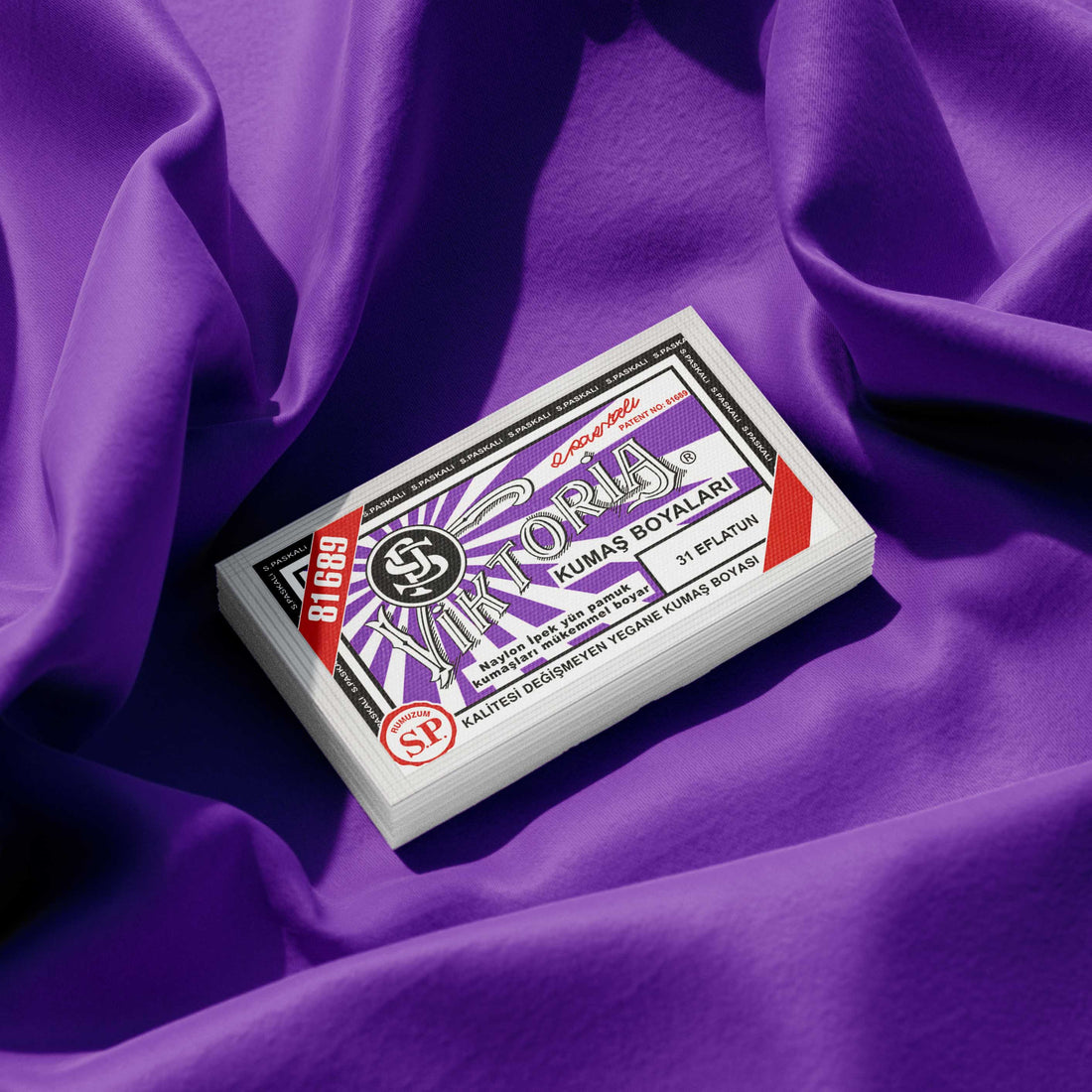
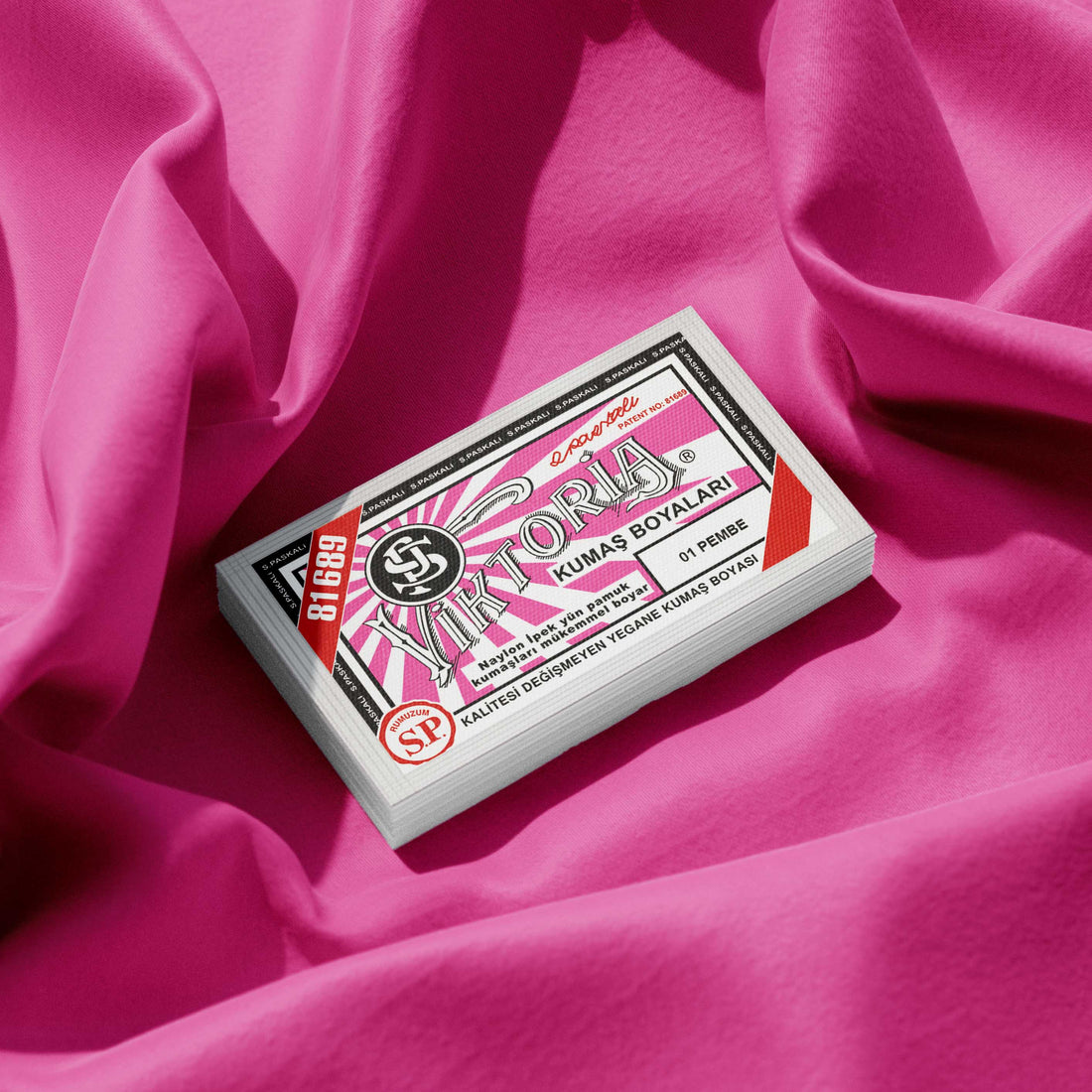
Dyeing cotton is a skill that changes your relationship with clothing. It's no longer a question of "this piece is ruined, I'll throw it away." It's "this piece is faded, I'll renew it." With Aybel, you have access to dyes specifically formulated to achieve professional results at home. Our fabric dyes are compatible with cotton, silk, wool, and other natural fibers, and offer a range of colors to suit any creative project. Fiske Fixing L ensures color lasts over time, withstanding frequent washing and sun exposure. Start with a dye like Pink Fabric Dye or Bright Lilac Fabric Dye ($4.99 each), and transform a forgotten garment into a new piece. Professional results don't require special skills, just attention to detail and the right products.

Frequently Asked Questions
What is the best dye for cotton fabrics?
Reactive dyes are the best choice for cotton because they create direct chemical bonds with the cellulose fibers, ensuring vibrant, long-lasting colors. Aybel offers cold-process reactive dyes compatible with cotton, linen, viscose, and other natural fibers. A 10g sachet optimally dyes 250g of dry fabric. For professional results, combine the dye with a fixative like Aybel Fiske, which significantly increases colorfastness even with frequent washing.
How to fix the color after dyeing cotton?
Fixing is essential to prevent color fading. After dyeing, rinse the fabric with cold water until the water runs clear. In the final rinse, add a fixative such as Aybel Fiske (100 ml per 1-1.5 kg of fabric) directly to the water or to the fabric softener compartment if washing in a washing machine. Let it sit for 30 minutes, then spin and dry. This step reduces color loss by up to 90% in subsequent washes.
Can you dye cotton in the washing machine?
Yes, dyeing cotton in the washing machine is the easiest and fastest method. Load the dry fabric, pour the dye and fixative into the appropriate compartments, and run a cycle at 60°C for 45-60 minutes. This method ensures uniformity because the fabric is constantly moving. It's ideal for whole garments, blankets, and large quantities. For even better results, pre-wash the cotton without detergent to remove any fabric softener residue that could interfere with color absorption.
What are the differences between natural and synthetic cotton dyes?
Synthetic dyes offer a wider color range, superior color fastness, and predictable results. Natural dyes, derived from plants or microorganisms, are environmentally friendly and create unique, vibrant hues, but they tend to fade more quickly with frequent washing and require mordants to set. Synthetic reactive dyes offer the best compromise: long-lasting colors, ease of use, and a lower environmental impact than traditional dyes, especially when combined with water-efficient technologies.
How to prepare cotton fabric before dyeing?
Preparation is crucial for consistent results. Wash cotton in hot water without detergent to remove fabric softeners, residue from previous dyeing, and dirt. If the fabric is new, soak it for 30 minutes in warm water to remove industrial starch. Wring well but do not spin dry: slightly damp fabric absorbs the dye more evenly. This pre-treatment ensures even color distribution and more vibrant, saturated final colors.
How much does it cost to dye cotton with Aybel products?
Dyeing cotton with Aybel is economical. A sachet of dye (10g) costs €4.99 and dyes 250g of dry fabric. A 225ml bottle dyes 1kg of fabric and costs €4.99. Add Aybel Fiske fixative (€4.99) to ensure durability. For a medium-sized T-shirt (200-300g), you'll spend about €10-15 in total, significantly less than the cost of a new garment and a fraction of the price of a professional dyeing service.
Why does the color appear faded or uneven after dyeing?
Uneven results are usually caused by improperly prepared fabric (fabric softener residue blocking absorption), insufficient dye dosage, too low a water temperature, insufficient movement during dyeing, or no fixative. To avoid this, always pre-wash the fabric, use the recommended dosage, keep the water at 60°C, ensure constant movement (in the washing machine or by hand), and use a fixative like Aybel Fiske in the final rinse. These steps ensure uniform, vibrant colors.